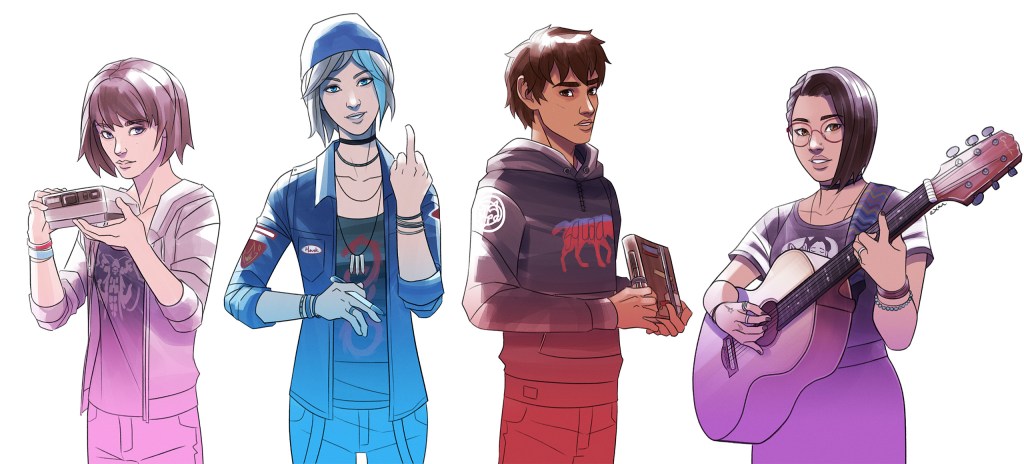
(Credit: @exm_art)
SPOILER WARNING for every game in the series
CONTENT WARNING Mention of self harm
I remember six years ago, when I started up Episode 1 of Life is Strange 2 and it asked me what decision I had ended the first game on. I don’t remember if I knew at the time that the game would take place in the same world that contained Arcadia Bay and all its various inhabitants, but either way, seeing that prompt was a memorable moment in my history with the medium. At the time it spoke of a promising series that, much like the works of Madeline L’Engle, would tell engaging sci-fi/fantasy stories with fascinating characters that criss-crossed each other’s paths at surprising times.
There was just one problem with this: At the end of A Wrinkle in Time you don’t choose whether Meg saves Charles from Camazotz or leaves him to his fate for a larger cause. The story simply does what it does, everyone is the same person in the same place no matter what. Not so with Life is Strange. In the first game alone, the final choice itself provides enough of a problem with any continuing narrative, but there’s also the matter of whether Max and Chloe are just friends or romantically attached, whether Max saved Kate or she committed suicide, whether Frank and his dog are alive or dead, down even to whether Max added her name to the wall in the junkyard shack. There’s always the option of importing decisions to the next game, ala Mass Effect, but that requires a budget that the series has never had, and likely never will. So you choose the most important choice and have a couple of vignettes centered around it, as Life is Strange 2 did, and it seems fine at the time. You see Arcadia Bay, either intact or destroyed. You meet David and hear either about the death of his stepdaughter or the destruction of his town and the loss of his wife (although he does actually get a relationship with Chloe, so it’s not all doom and gloom for him). Even then, though, there were things I was told that I did not want to know. You see, I chose to save Chloe. I almost always do to this day. My thoughts on the first game’s ending are for another post, but for now I will say that the Sacrifice Arcadia Bay ending is (deliberately, I think) ambiguous about the human toll caused by the storm. It seems possible that most people could have survived and the main cost is property damage. The sequel does not pull that punch. David implies that nearly everyone in Arcadia Bay died. This was a pretty rough thing to hear in a game that had mostly been going its own way. I was consoled a little bit by the fact that Max and Chloe were still together, seemingly happy.
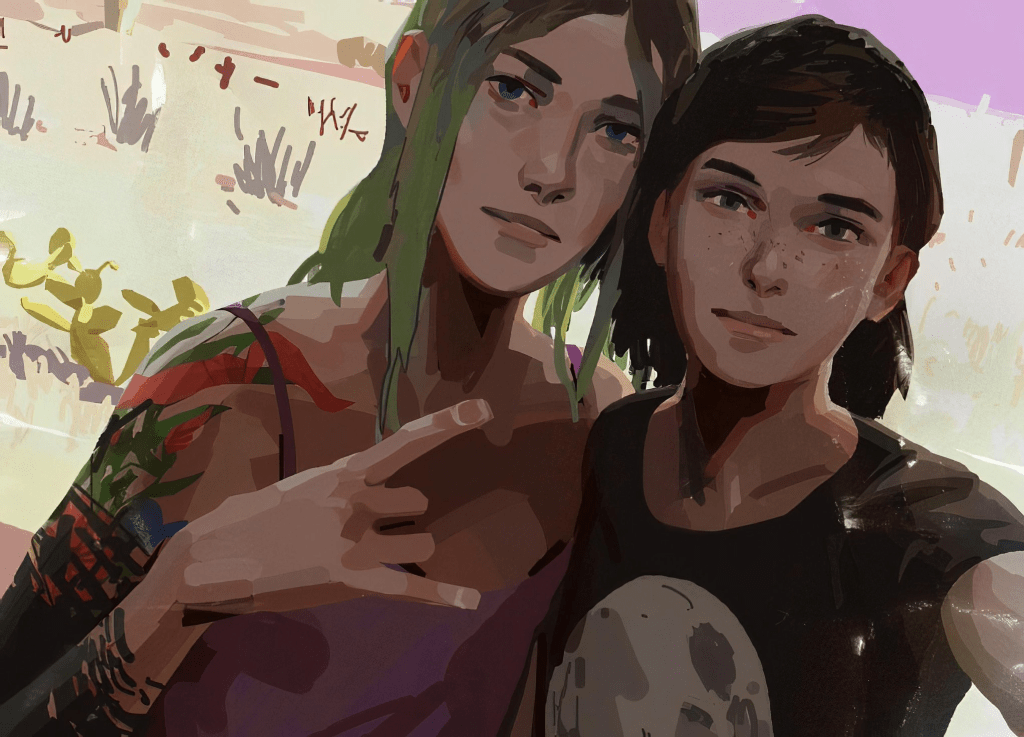
In the end, it seemed, the shared universe aspect would be fairly minor, but that was okay. At least I’d get to check in on how everyone from the previous games were doing, right?
True Colors managed to both use the shared universe aspect to its best advantage of all the sequels to date while also mostly eschewing that aspect. It brought back one of the best new characters in the prequel, Before the Storm, while not really mentioning a single thing about the world outside Haven Springs. Whether it being possibly the second best full game in the series after the original is largely because of this is up for debate, but Steph Gingrich managed to be one of the best parts of True Colors, and without putting all these games in the same world she would not have been there. On the other side of the coin, not having to hew to any previous choices meant the game could instead focus solely on its own narrative without having to pause to say “remember that thing that happened in that other game?” Its DLC, Wavelengths, focused on Steph and did the fleshing out of the world that the main game did not, but it also personalized the death toll of the storm even more. Joyce dying was one thing. What parent wouldn’t die so their child could live? But hearing the stories of how Steph’s mother, along with her friend Mikey’s brother Troy (a character you actually knew and helped if you’d played Before the Storm) died horribly adds to the guilt of choosing that ending. I haven’t chosen the Sacrifice Chloe path in Life is Strange 2 or Wavelengths, but I do know that Chloe’s death leads Joyce and David to split up anyway, and Steph is still traumatized from losing both Chloe and Rachel so close together, so I guess both games continued to acknowledge that you had no good choice at the end of the first game. Still, if one were inclined to wonder how long this world could sustain itself by referencing past games when the amount of branching paths was increasing exponentially, you’d be right to. It seemed the writers of True Colors were thinking the same thing. Not a mention of anything in the previous games except for a bit in the nugget of DLC.
True Colors did okay, better than the overly ambitious Life is Strange 2, but it still wasn’t the force that the first game was. The 2022 remasters of the first game and its prequel gave the series a little financial help, but I was starting to wonder: How long before they get desperate and bring back Max Caulfield?
Not that long, it turned out.
Deck Nine, who had been given the series after Life is Strange 2 failed to meet publisher Square Enix’s expectations, was floundering. They’d been rocked by a toxic work environment, finally ejecting their bigoted COO after years of the staff fighting to do so. Then their non Life is Strange Game, The Expanse, flopped. Their contracts with Telltale games fell through. They were in dire straits. Life is Strange was all they had left. So, the inevitable finally happened.
I was extremely ambivalent when I saw the first trailer for Life is Strange: Double Exposure. I love Max Caulfield. She and Chloe Price are my favorite characters in all of video games, beating out such legends as Vivi from Final Fantasy IX and GlaDOS from the Portal duology. Max is an extremely special character to me, but I knew that bringing her back for a sequel would come at a cost. At first I assumed it would follow only the Sacrifice Chloe ending, and I made my peace with that. That would still make for a good game, I thought. Then Deck Nine promised to respect both endings. Okay, all well and good to say that, but if you’re doing this; if you’re doing this for real, that is a lot of work, and I questioned how much, given that the game’s budget could only be a small fraction of a huge AAA release, Deck Nine could actually do.
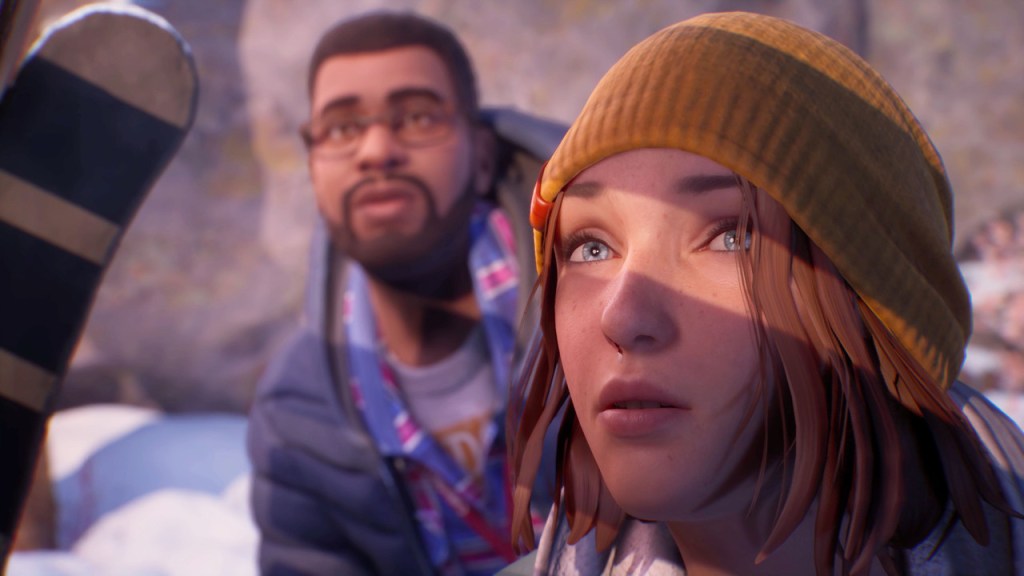
I will spare you the sordid details that anyone still following this franchise already knows, but the most damning thing to come out of Life is Strange: Double Exposure, is that it has decided to go from Madeline L’Engle to MCU, sacrificing much of the character work that the games, up to that point, had excelled at. Another problem, that of trying to meld multiple versions of a character that would have led very different lives depending on the choices she had made into one version of her became very apparent very quickly upon playing the game. I’m not going to get into it too much here, as this is not a review of the new game. It does seem, though, that DontNod themselves committed the original sin of this franchise. It made sense for Before the Storm to take place in the same universe as the original, it being a prequel and all, but once they tied the sequel to the first game, all bets were off. You see, Life is Strange the first, whether it’s your favorite in the series or not, was a phenomenon in the adventure game genre only approached this century by the first Walking Dead game, and it may even have surpassed that one in importance, given that it is more accessible and has even deeper characters and relationships. It has influenced narrative storytelling in games like few others. Just look to this year’s 1000x Resist and Mouthwashing for examples. It was lightning in a bottle, and its characters, especially protagonists Max and Chloe, are fan favorites and known outside the fanbase. The unfortunate side-effect of making this a shared universe, then, is that Max, Chloe, and Arcadia Bay exert such a gravitational pull on the series that the more it expands, the flatter it gets, until it likely collapses in on itself. Making a new game featuring Max Caulfield, especially knowing what we know about it now, looks to only accelerate this process, but how long that process will take is up for debate at this point. It looks highly likely that we have at least one more game in the series, and there is no doubt that the series’s fate will be determined by the success or failure of this new Max Caulfield duology. The leaders at Deck Nine have to know the pressure cooker they have placed themselves in, and the statements by former devs only confirm this. It’s too soon to say that the implosion of the Life is Strange franchise is imminent, but if it does happen, the seeds weren’t planted by Double Exposure, no. They were planted way back in 2018 when the idea of a Life is Strange universe began.
 Hide And Seek In Waterfalls: Thoughts on Life is Strange